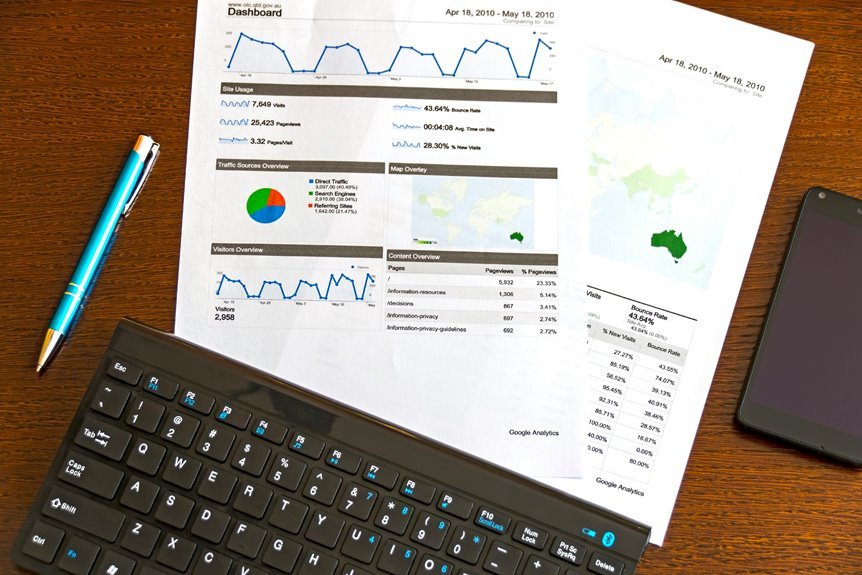
The Business Performance Dashboard plays a crucial role in helping organizations track essential metrics, including those identified by 959772249, 18003147195, 644306464, 8009059146, 120426517, and 1204890648. These metrics provide insights into financial health, customer satisfaction, and operational efficiency. By consolidating this data, companies can make informed decisions. However, the effectiveness of a dashboard often hinges on its design and implementation. What strategies can enhance its impact on organizational success?
Importance of Business Performance Dashboards
Although many organizations employ various methods to evaluate their performance, the significance of business performance dashboards cannot be overstated.
These dashboards leverage data visualization techniques to present complex data clearly, enhancing decision-making processes. By facilitating quick assessments of key indicators, they empower stakeholders to make informed choices, ultimately driving operational efficiency and strategic alignment.
Thus, dashboards serve as crucial tools in modern business environments.
Key Metrics to Track in Your Dashboard
Identifying the key metrics to include in a business performance dashboard is essential for maximizing its effectiveness.
Key performance indicators should encompass financial indicators, customer satisfaction, operational efficiency, sales growth, and market trends.
Case Studies: Success Stories With Dashboards
Effective implementation of key metrics in business performance dashboards has led to notable success stories across various industries.
For instance, companies utilizing strategic dashboard design have enhanced decision-making through effective data visualization, resulting in improved operational efficiency and profitability.
These success cases illustrate how harnessing the power of dashboards can empower organizations, providing them with the insights needed to thrive in competitive markets.
Tips for Creating an Effective Dashboard
When designing a business performance dashboard, clarity and relevance are paramount to ensure that users can quickly grasp critical insights.
Effective dashboard design should prioritize key performance indicators, fostering user engagement through intuitive layouts.
Incorporating interactive elements allows users to explore data dynamically, enhancing understanding.
Ultimately, a well-crafted dashboard serves as a powerful tool for informed decision-making and strategic planning in any organization.
Conclusion
In conclusion, a Business Performance Dashboard acts as a lighthouse, illuminating the path for organizations navigating the turbulent seas of market dynamics. By integrating key metrics like 959772249 and 8009059146, businesses can chart their course toward success with precision. The clarity and insight provided by effective dashboards not only enhance decision-making but also align strategic objectives, ultimately guiding companies to thrive amidst competition. Embracing this tool symbolizes a commitment to informed growth and operational excellence.